UK Logistics and Freight Market Update: Autumn Hiring Priorities and Operational Shifts
Logistics Recruitment · 2 September 2026
As the UK logistics network enters the final quarter of the year, the industry is balancing seasonal volume increases with longer-term structural adjustments. While earlier years were defined by acute volatility and rapid disruption, the current landscape is marked by a deliberate push towards operational efficiency, cost discipline, and technical capability. Across shipping lines, freight forwarders, and distribution centres, businesses are focusing on sustainable headcount planning rather than reactive recruitment.
Understanding these broader commercial patterns is essential for organisations seeking to secure talent that can deliver measurable value across transport, warehousing, and customs operations.
Calibrating Freight and Transport Teams for Peak Volumes
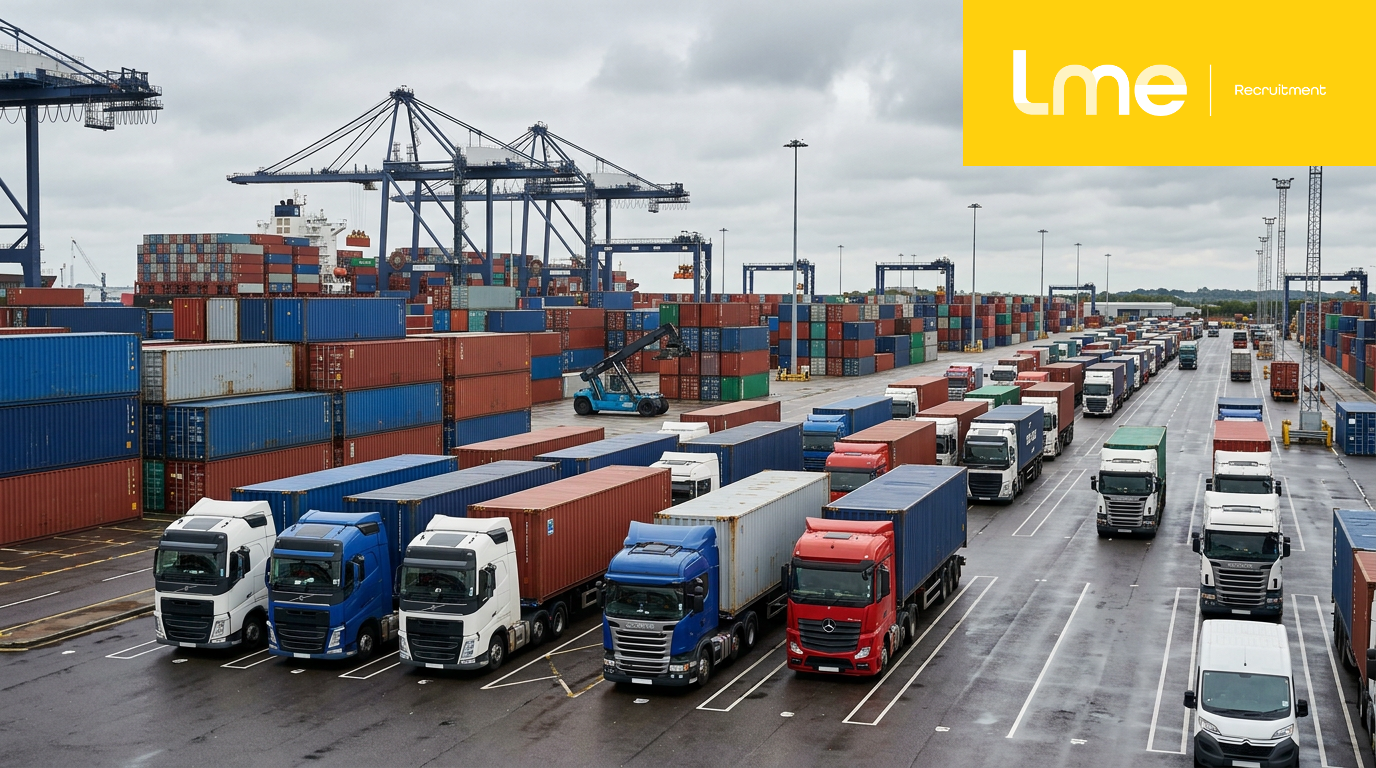
The traditional build-up to the peak trading season is being approached with measured caution across road haulage and international forwarding. With ocean container rates and road freight capacity operating in more predictable bands, commercial margins rely heavily on day-to-day operational precision.
Hiring demand within ocean and air freight forwarding is concentrated on experienced operators who bring established carrier relationships and confident exception-handling skills. Freight businesses are prioritising professionals who can maintain customer communication during delays, manage complex route combinations, and spot margin opportunities within consolidations.
Similarly, road transport operations across the East of England and the wider national network are seeking transport planners and fleet managers capable of maximising asset utilisation. With ongoing overhead pressures, transport offices require individuals who can balance driver hours compliance, fuel management, and multi-drop scheduling without sacrificing service reliability.
Technical Fluency and Systems Leadership in Warehousing
The warehousing and contract logistics sector continues to absorb significant operational changes driven by facility modernisation, warehouse management system (WMS) upgrades, and semi-automated materials handling. As a result, the skill profile required on the warehouse floor and in operational administration is evolving.
Inventory accuracy, stock integrity, and systems interoperability increasingly dictate site performance. Operational leaders are expected to bridge the gap between physical material flow and digital reporting. Demand is particularly steady across several key functional areas:
- Warehouse Operations Managers: Leaders capable of managing automated picking environments, maintaining strict health and safety standards, and applying continuous improvement principles to daily workflows.
- Inventory and Systems Controllers: Specialists skilled in managing ERP and WMS reconciliations, conducting cycle counting protocols, and resolving discrepancy trends before they affect order fulfilment.
- Contract Logistics Coordinators: Account-focused operators who can manage multi-user warehouse environments, enforce service level agreements, and support the smooth onboarding of new commercial clients. For hiring managers, the focus has shifted towards candidates who combine practical warehouse floor experience with solid data literacy and systems adaptability.
Specialised Compliance and Border Operations
The UK customs landscape continues to mature, yet regulatory accuracy remains a critical differentiator for international traders and freight intermediaries. Ongoing refinements to digital border processes, safety and security reporting, and commodity classification rules mean that compliance cannot be treated as an afterthought.
Businesses are actively recruiting customs entry clerks, clearance supervisors, and trade compliance managers who possess detailed technical knowledge of declarations, tariff codes, and transit procedures. The most sought-after professionals are those who not only execute entries accurately but can also conduct internal audits, identify preferential tariff opportunities, and resolve complex border queries swiftly.
Employers recognise that strong in-house compliance capability directly protects against costly port storage charges, customs penalties, and customer dissatisfaction caused by preventable border hold-ups.
Aligning Recruitment with Operational Strategy
Navigating the current logistics employment market requires an understanding of both local candidate availability and sector-specific operational pressures. As businesses across freight forwarding, transport, and warehousing fine-tune their teams for the months ahead, securing individuals with the right mix of technical skill and practical reliability remains central to commercial success.
Whether you are looking to strengthen your operational team ahead of peak volume or exploring your next professional move within shipping, freight, warehousing, or transport, LME Recruitment provides knowledgeable, sector-focused support across the region. Connect with our team to discuss your recruitment plans or your next career step.